Elon Musk Buys a Failing Orphanage and Turns it into a State-of-the-Art Haven for 200 Children!
Elon Musk once consoled James Riley — a father who lost his teenage son in a fiery Tesla Model S crash — by recalling the heartbreak of holding his own infant as he died.
Now, Tesla Inc. is fighting to discredit Riley’s claim that the automaker bears responsibility for his son’s death. The case, set for a week-long trial starting Wednesday in federal court in Fort Lauderdale, Florida, marks the company’s first jury showdown over a fatal accident involving one of its vehicles.
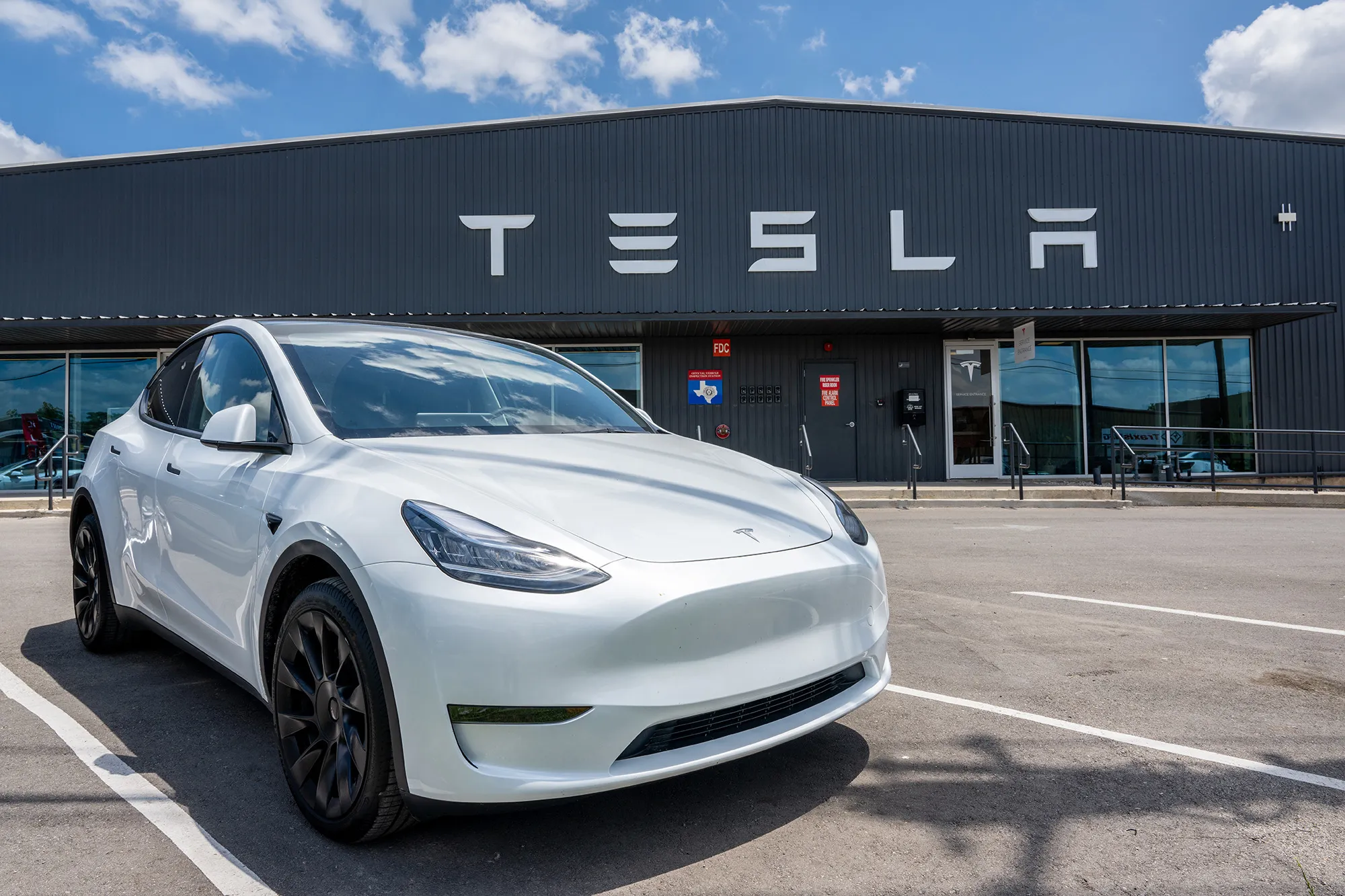
Unlike other lawsuits that target Tesla’s Autopilot driver-assistance system, this dispute doesn’t allege a design flaw. According to Michael Brooks, acting executive director of the Center for Auto Safety, the outcome is unlikely to harm Tesla’s public image. Instead, it underscores the company’s reputation for aggressively battling lawsuits rather than settling them. “It really highlights questions about how much power consumers have in situations like this,” Brooks said.
Tesla declined to comment.
The crash occurred when 18-year-old Barrett Riley was driving 116 miles per hour (187 km/h) on a Fort Lauderdale street, lost control, and slammed into a home’s concrete wall. Both Riley and a passenger died in the ensuing fire, while a third passenger thrown from the back seat survived.
Riley’s parents argue Tesla acted negligently by removing a speed-limiting device that had been installed at his mother’s request just two months earlier. Tesla contends Barrett misled service staff into disabling the limiter, which had capped the car at 85 mph.

After the accident, Musk personally reached out to Riley. Court records show the two exchanged emails in which Musk expressed sympathy, mentioning the death of his own child. That communication prompted Tesla to revise its speed-limiting software, allowing drivers to set maximum speeds between 50 and 90 mph. The company even noted in its owner’s manual that the change was made in memory of Barrett.
Two years later, however, the family filed suit. Their initial complaint claimed a defect in the Model S battery caused it to explode and that Barrett died from the fire, not the impact — a claim aligned with a medical examiner’s report cited by the National Transportation Safety Board. A judge later dismissed that theory after Tesla challenged the evidence.

Battery fire claims remain common in litigation against EV makers, Brooks noted. “There are a lot of cases tied to battery fires. Hopefully, this case doesn’t undermine those because they deserve to be tested in court,” he said.
Tesla, for its part, intends to show Barrett’s history of reckless driving. The company won’t be allowed to use certain videos — including one in which Barrett was clocked at 155 mph with the caption “I’M GONNA DIE” — but it will point to a prior ticket for driving 112 mph in a 50 mph zone, along with data logs showing speeds reached in the Model S before the crash.
Pretrial hearings have already revealed some of what the jury may see: emails, texts, testimony, and video evidence involving Tesla staff, Barrett, his friends, and the Riley family.