Elon Musk, Broken and Alone, Opens Up About His Personal Life
Businesses that had been looking for stability as President Trump’s trade war stretched into its eighth month are instead encountering more turbulence. Legal battles are unraveling a central justification for his tariff strategy, deepening uncertainty rather than providing clarity.
On Friday, a federal appeals court declared that most of the tariffs imposed under Trump’s direction are unlawful. While many trade analysts anticipated such a ruling, the decision nevertheless leaves importers in a precarious position, with the resulting instability expected to drag on the economy through year-end and potentially well into 2026.
Trump Marks ‘Liberation Day’
The court concluded that Trump’s reliance on a 1977 statute to justify emergency tariffs was invalid, upholding a lower-court decision from May 28. The matter is now poised to head to the Supreme Court, though the outcome and timeline remain unclear.
Throughout the year, Trump has leaned on the International Emergency Economic Powers Act (IEEPA) of 1977, asserting that ongoing trade deficits constitute a “national emergency” granting him the power to impose tariffs. Yet IEEPA contains no language authorizing new taxes or duties—responsibilities traditionally reserved for Congress. The appeals court emphasized this gap while also questioning whether long-standing trade imbalances truly constitute an emergency.
Trump has dramatically expanded the use of emergency tariffs in his current term, with such measures accounting for nearly four-fifths of all new tariff revenue, according to the Tax Foundation. If the Supreme Court ultimately strikes them down, he would need to devise a fresh strategy for reshaping global commerce.
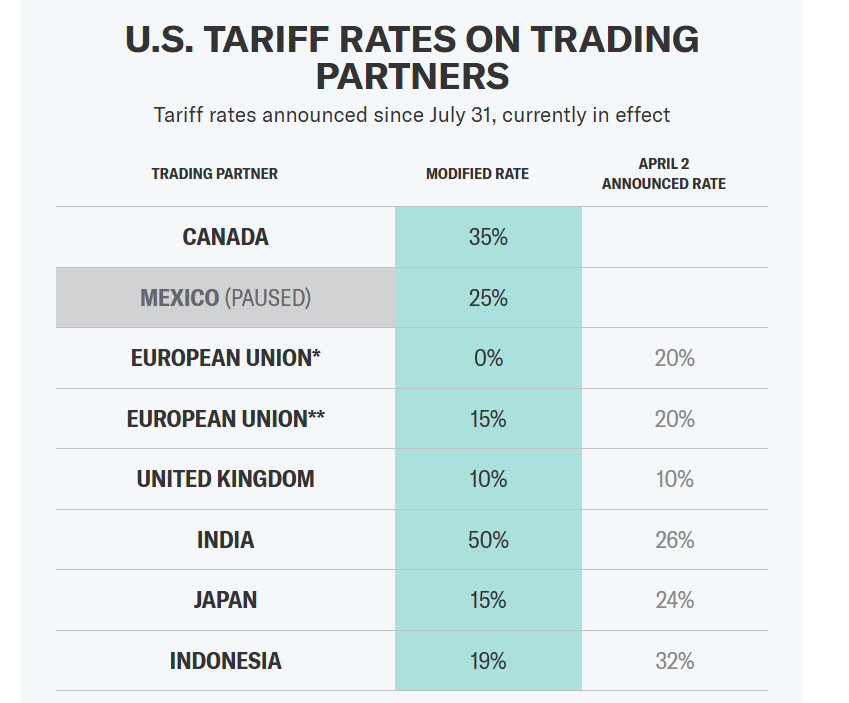
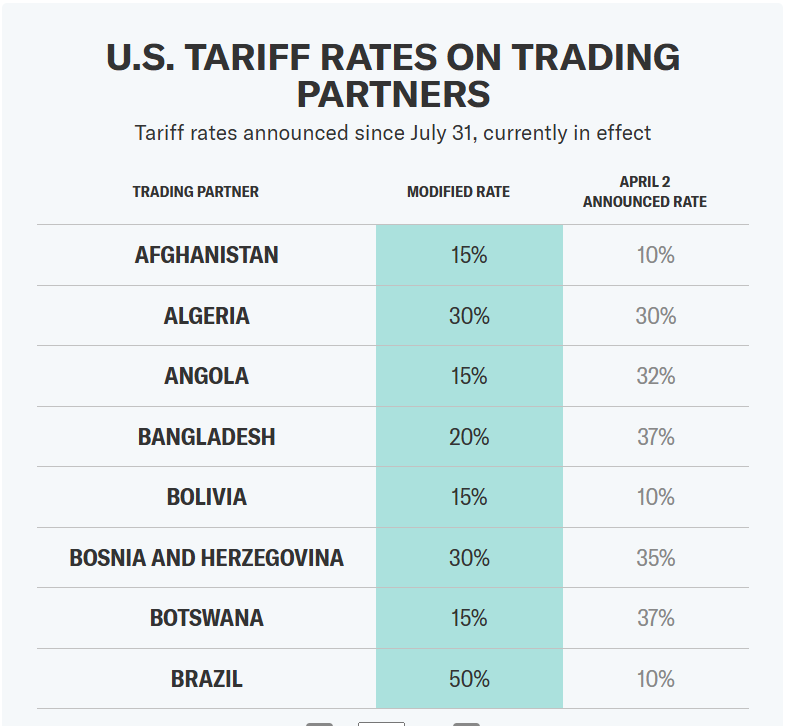
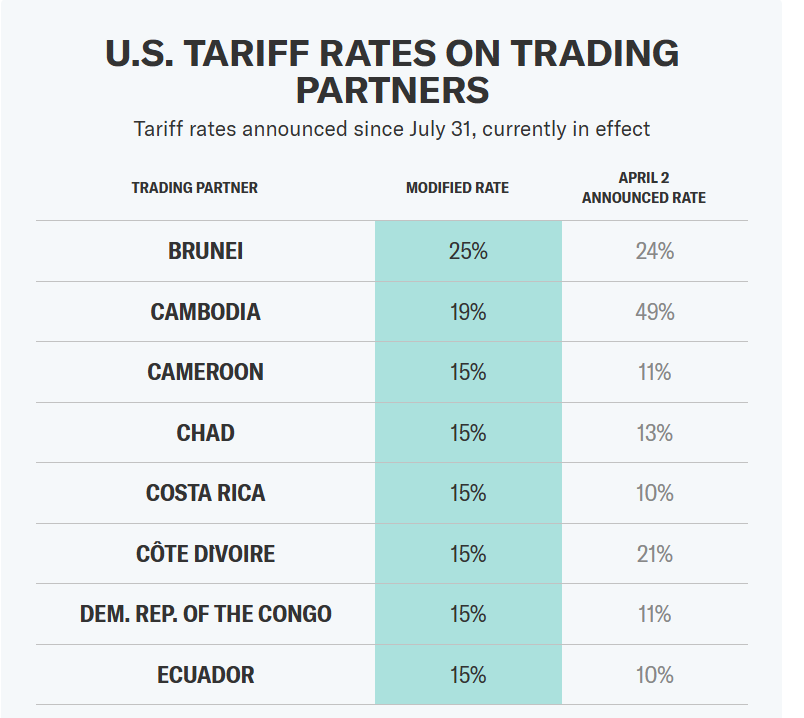
The emergency tariffs largely take the form of “reciprocal” taxes ranging from 10% to 50% on goods from dozens of countries, with Chinese imports—the second-largest source for U.S. consumers—seeing hikes of more than 30 percentage points. Trump has been negotiating bilateral deals to make these tariffs permanent and secure concessions for American exporters, but those agreements would collapse if the court invalidates the emergency powers.
The president has also used the tariffs as geopolitical leverage, such as placing a 50% duty on Indian imports to dissuade New Delhi from purchasing Russian oil, and a similar penalty on Brazil in part to pressure the government over the treatment of former President Jair Bolsonaro. Losing emergency tariff authority would strip him of those tools.
For now, the appeals court has left the measures in place until October 14, giving the Supreme Court time to intervene. Importers may delay shipments until then to avoid paying duties that could later be overturned. The result has been highly erratic trade flows, with imports surging and plunging as companies try to navigate shifting tariff windows.
If the ruling holds, the government may have to reimburse importers roughly $100 billion in collected duties—funds Trump has claimed help narrow the federal deficit.
Other tariffs, however, remain untouched. Duties on products such as steel, aluminum, autos, and parts—justified under national security or anti-dumping laws—rest on stronger legal footing. If deprived of emergency tariffs, Trump will likely lean more heavily on these alternative mechanisms, though they require slower processes and tend to be narrower in scope. Even then, they remain vulnerable to legal scrutiny.
While importers stand to benefit significantly if emergency tariffs disappear, Trump shows no signs of abandoning his broader trade war. He appears determined to find other avenues to keep the pressure on.